
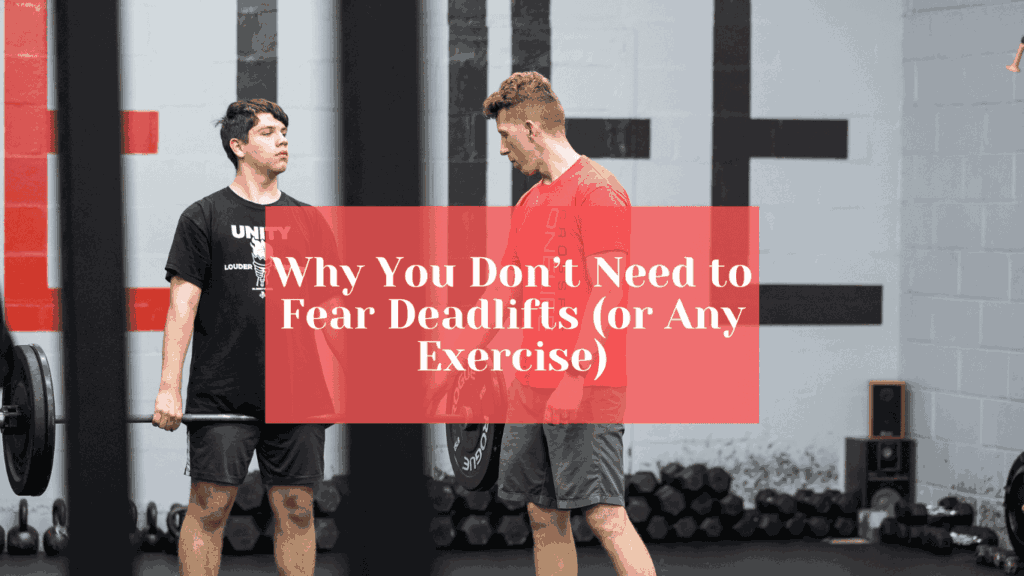
Why You Don’t Need to Fear Deadlifts (or Any Exercise)
“Deadlifts will wreck your back.”
“Squats destroy your knees.”
I hear this stuff all the time. In the gym. From new clients. From people who had one bad experience years ago and never touched a barbell again.
And I get it. Pain sticks with you. Especially when you’re a busy adult, a parent, someone who can’t afford to be sidelined.
But here’s the honest truth:
Most exercises aren’t dangerous. Poor load management is.
At One Life Personal Training in Glen Cove, we don’t label movements as “bad.” We coach people how to do them appropriately — based on where their body is right now, not where it used to be or where Instagram says it should be.
Let’s break this down in plain English.
What Load Management Actually Means
Load management is how we help people get stronger without breaking down.
It’s not just about how much weight is on the bar. It’s about managing stress so your body can recover, adapt, and actually improve.
Think of your body like a credit card.
You’ve got a limit.
Go over it too often — lifting too heavy, too often, with poor recovery — and eventually the bill shows up as pain, stiffness, or injury.
At One Life, we manage load by adjusting things like:
- How heavy the weight is
- How many reps and sets you do
- How often you train certain movements
- How fast or slow you move
- How fatigued or stressed you are that day
You don’t avoid movements.
You scale them.
That’s the difference.
Pain Is Feedback — Not a Stop Sign
A lot of people fear deadlifts or squats because of a past injury. Totally understandable.
But pain doesn’t automatically mean damage. More often, it’s information.
It usually means something didn’t match your current capacity:
- Too much weight
- Too much volume
- Poor setup
- Fatigue you didn’t account for
So instead of saying, “Deadlifts hurt my back,” we say:
“Let’s reduce the load, clean up the setup, and rebuild confidence.”
No guessing. No pushing through blindly. Just smarter decisions.
It’s Not the Movement — It’s the Mismatch
Here’s something people forget:
You already deadlift every day.
Picking up groceries.
Lifting your kid.
Moving furniture.
Grabbing a laundry basket.
That’s a hinge. That’s a deadlift.
Avoiding it in the gym doesn’t protect you. It actually leaves you less prepared for real life.
Our job is to coach that movement safely so your body gets better at it.
Some real-life One Life examples:
- If pulling from the floor feels off, we raise the bar
- If a barbell doesn’t feel right, we use kettlebells or dumbbells
- If overhead pressing feels sketchy, we switch to a landmine press with a safer angle
That’s not babying you.
That’s intelligent progression.
Why Fear Makes Things Worse
When people avoid movements out of fear, a few things happen fast:
- Strength drops
- Mobility tightens up
- Confidence disappears
Then the movement actually does hurt — not because it’s bad, but because your capacity is lower.
This is the cycle we see all the time.
What we do instead is reintroduce movements in a controlled, scalable way. Slowly building tolerance. Slowly building trust. And before you know it, people are doing things they swore they’d “never do again.”
That’s a big win.
Where Assessments Come In (This Is Huge)
One reason people get hurt is they’re guessing.
At One Life, we don’t guess.
Every new client goes through:
- A mobility and flexibility assessment to see how well your joints move and where you’re restricted
- A strength balance assessment to identify imbalances side to side or between muscle groups
This tells us a lot:
- What movements need to be modified
- Where to start loading
- What needs extra attention so nothing gets overloaded
This is how we individualize training. Two people can do the “same” workout and be training completely differently based on what their body needs.
That’s load management done right.
The One Life Approach to Strength
Here’s what training actually looks like inside our gym:
- We meet you where you are
- We adjust workouts based on how you feel that day
- Every movement has regressions and progressions
- We prioritize long-term strength over short-term ego lifts
The goal isn’t just lifting heavier weights.
The goal is trusting your body again.
Feeling capable.
Feeling strong in real life.
That’s real confidence.
No More Fear-Based Training
Deadlifts don’t ruin backs.
Squats don’t destroy knees.
Bad planning does.
When you train with coaches who understand load, technique, mobility, and context, you stop guessing and start progressing.
Whether you’re training one-on-one or in a small group, we’ll build a plan around your body, your goals, and your life.
You’ve got more strength in you than you think.
Let’s uncover it — the right way.
