
Your Metabolism Isn’t Broken — Here’s What’s Actually Slowing It Down
Let’s clear this up right away
One of the most common things I hear is, “My metabolism is broken.” And I get why people feel that way. You’re trying. You’re thinking about food. You might even be eating less than you used to. And still… nothing changes.
But here’s the truth. Your metabolism isn’t broken. It’s responding exactly how it’s designed to respond to your habits, your stress, your sleep, and how much you move.
What people mean when they say ‘broken’
Most people don’t mean their body stopped working. They mean fat loss feels harder than it used to. They mean they can’t eat the way they did in their 20s. They mean the margin for error feels smaller.
That’s not a broken metabolism. That’s a slowed metabolism.
And it usually happens gradually, not overnight.
The biggest reasons metabolism slows down
The most common cause is eating too little for too long. Chronic under-eating tells your body that food is scarce. So it adapts. You burn fewer calories. You move less without realizing it. Energy drops. Hunger signals get louder.
Another big factor is muscle loss. If you stop strength training or never built muscle in the first place, your body simply doesn’t burn as much energy at rest. Muscle is expensive tissue. Without it, metabolism drops.
Then there’s daily movement. Sitting more, driving more, working more, scrolling more. Even if you work out a few days a week, low movement the rest of the day adds up fast.
Add in poor sleep and high stress, and now your body is just trying to survive, not lose fat.
Why cutting more food isn’t the fix
When fat loss stalls, most people respond by eating even less. That feels logical, but it usually makes things worse. Energy drops further. Workouts suffer. Steps go down. And metabolism slows right along with it.
That’s why people end up stuck eating very little and still not losing weight.
The fix is rebuilding, not restricting
The way out is to rebuild your metabolism.
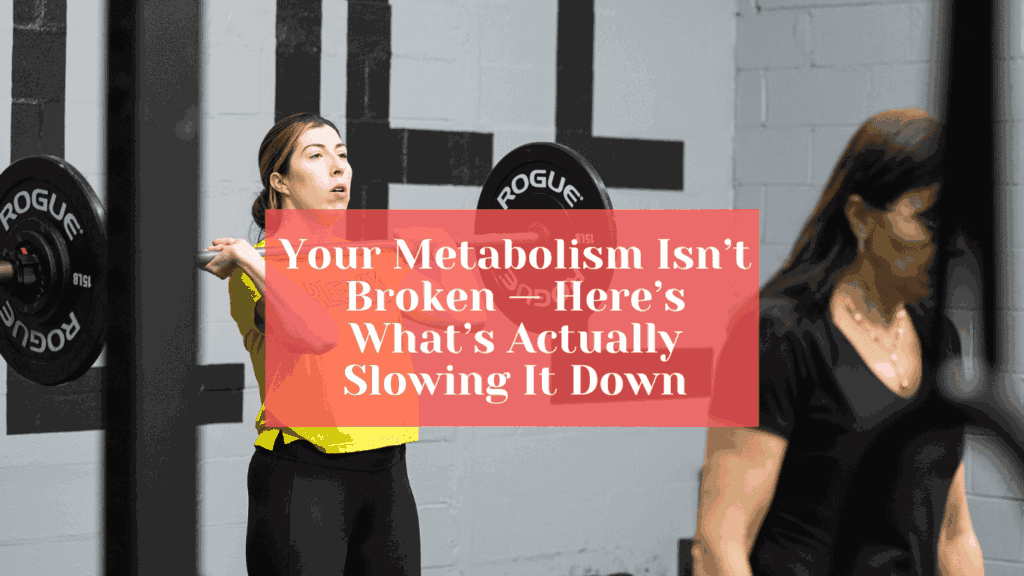
That means lifting weights to build or maintain muscle.
It means moving more during the day, not just during workouts.
It means eating enough protein and enough total calories to support training and recovery.
It means sleeping and managing stress as best you can in real life.
As a married dad of three, I’m not chasing perfection. I’m chasing consistency. And that’s what actually works.
This takes patience, but it lasts
Rebuilding a metabolism isn’t flashy. It doesn’t promise fast results in two weeks. But it gives you something better. Energy. Strength. Confidence. And fat loss that actually sticks.
Your metabolism isn’t broken. It just needs the right inputs again.
